
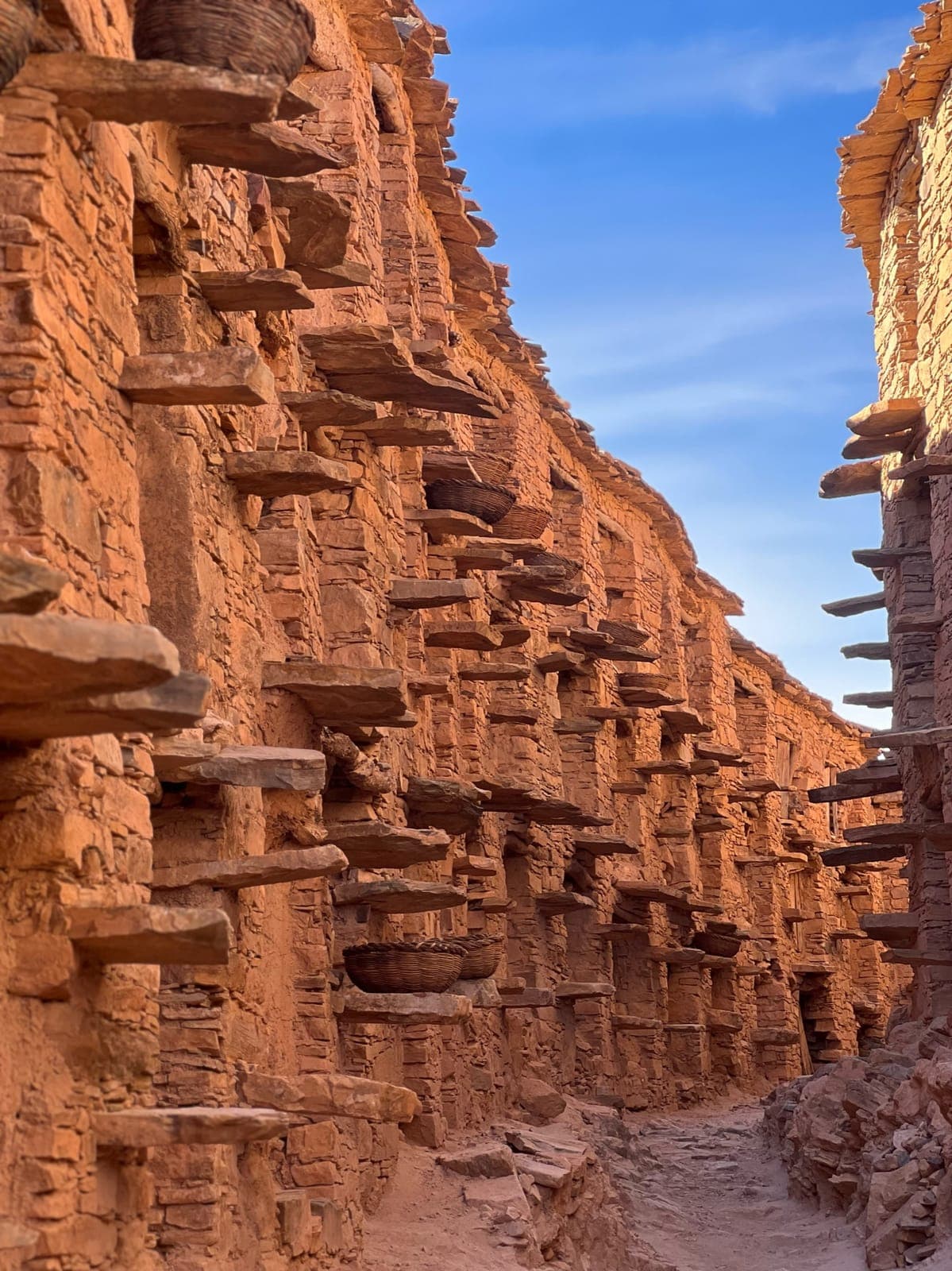
Anti-Atlas, Ait Baha and Tata
Aoukerda Oasis and the Ighber Ifrane Granaries
Our longest day out: the palm oasis of Aoukerda Smougen in the south-east, an old fortified Amazigh granary in the Anti-Atlas, and a traditional house.
The practical bits
- Length
- Full day
- Time out
- About 12 hours
- Difficulty
- Easy
- From Agadir
- 196 km
- Drive time
- 3h30
- Best time
- Spring and autumn
- Phone signal
- No phone signal
This is our longest day by far. Aoukerda is around three and a half hours from Agadir each way, so expect an early start and a lot of time on the road.
Aoukerda Smougen is about three and a half hours from Agadir, not far from Tiznit, in the commune of Tamanart in Tata province. The village sits between the mountains and a valley, in the kind of landscape where desert, oasis and village life all meet. It is hard country, and the oasis is the story of how people have lived in it: palms, almond trees and small farms, all of it depending on water.
Around the village we walk out to three places it is known for: the Titanic, the cave of Ifri n Tfqirt and the Window of Life. The route depends on the weather and the state of the ground on the day. If you would like, we can sit down for tea or a local meal with people who live there.
The day also takes in a traditional house and, near Ait Baha in the Anti-Atlas, the collective granary of Ighber Ifrane, also known as Agadir Inoumar, reached by a short walk of about a kilometre. It is a long day and an easy one on foot. Most of the effort is the road, and the reward is a side of Morocco that looks nothing like the tourist cities.
What makes it special
- The palm oasis of Aoukerda Smougen, where the mountains meet the desert
- Three local landmarks: the Titanic, the cave of Ifri n Tfqirt and the Window of Life
- A fortified collective granary more than 300 years old, in the Anti-Atlas
- A traditional house
- Oasis farming — palms, almonds and the water everything depends on
- A Morocco that looks nothing like the tourist cities
The story
In Amazigh an agadir is a fortified collective granary — igoudar, in the plural — and they are sometimes called the oldest banking system in the world. Built from stone and earth, they kept the grain, valuables and important papers of a whole community behind one set of walls. The one at Ighber Ifrane, known as Agadir Inoumar, is more than 300 years old; local sources date it to the Alaouite era and the reign of Sultan Moulay Ismail. It has four towers, three water cisterns and two gates, and it was run by an amin, the person responsible for managing it and guarding what was inside.
What you can do here
- Hiking in the mountains around the oasis, on a route chosen for the weather
- The short walk to the granary, about a kilometre
- Photography — mountains, palms and the oasis
- Seeing how the oasis is farmed, and why the palms and the water matter
- Meeting people in the village, with respect for their privacy
- Tea or a local meal with people from the village
Everything here is included in the day if you want it, and nothing is compulsory. Tell us in advance what you are hoping for and we will plan around it.
When to come
Spring and autumn are the times to go: the best weather for walking and exploring, though we still keep an eye on the forecast. We do not recommend this trip in summer, when the heat down here is severe, and in the rainy season we take extra care in a landscape full of valleys and ravines.
What to bring
- Plenty of water — it is a long day
- Sun hat and sunscreen
- Proper walking shoes
- Clothes for the weather, with an extra layer for the mountains
Good to know
- After rain, or with a thunderstorm about, we stay right away from the valleys and flood channels. If the forecast is bad we will move the day.
- There is almost no mobile coverage in the village. Expect to be offline for most of the day.
- The granary is heritage. Please do not touch or damage the buildings, and do not take anything from the site.
Other trips
 Half day or full day
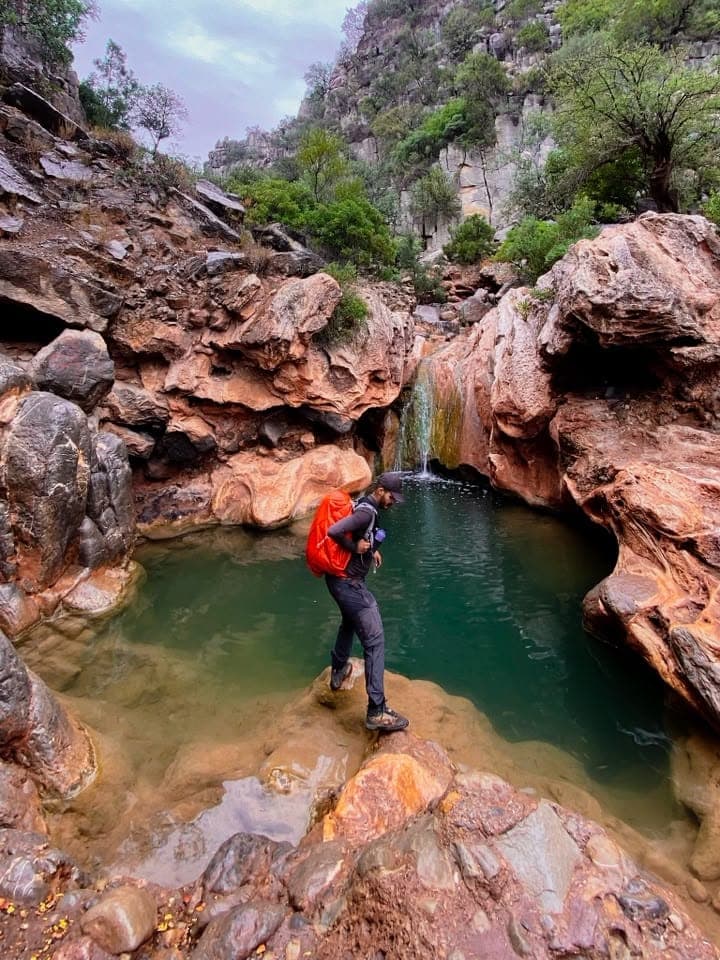
Ait Lahcen Waterfalls
Waterfalls, pools and a palm oasis an hour from Agadir — with an optional climb to a 1 160 m summit looking back at the coast.
- Distance from Agadir
- 32 km
- Drive time
- 1h
- Difficulty
- Easy to moderate
Private tripAsk for a price
 Half day
Ait Chleuh Valley
A green valley in the Ida Outanane mountains with water running all year, reached on foot through an old Amazigh village.
- Distance from Agadir
- 43 km
- Drive time
- 1h15
- Difficulty
- Easy
Private tripAsk for a price