
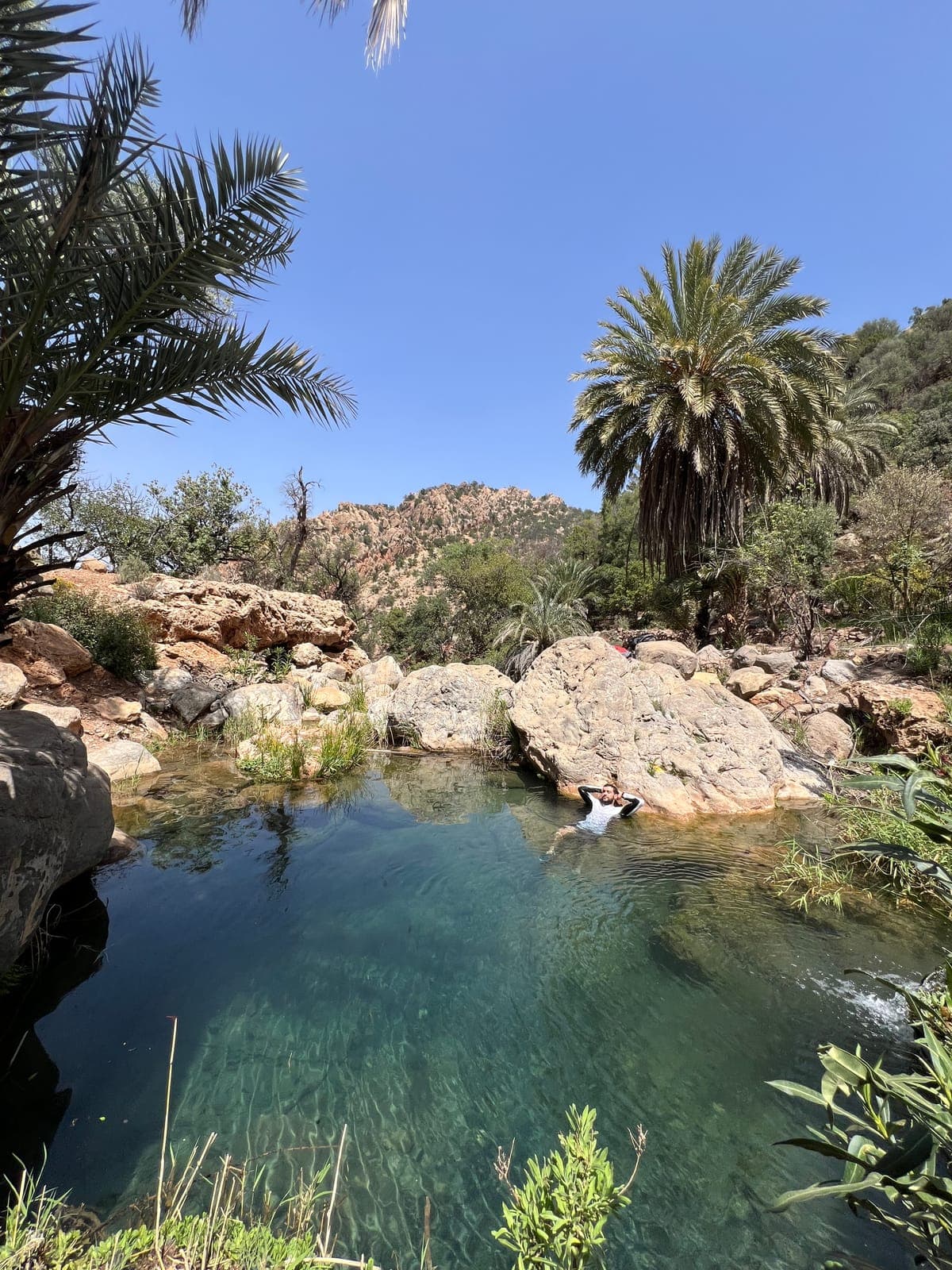
Tidrart and Imouzzer, Ida Outanane
Assif n Ahad Cave and the Hidden Lake
Two quiet corners of Ida Outanane in one day: the cave of Assif n Ahad in the Tidrart valleys, then a walk to the hidden lake at Aghri Oufla.
The practical bits
- Length
- Full day
- Time out
- About 9 hours
- Difficulty
- Easy to moderate
- From Agadir
- 70 km
- Drive time
- 1h30
- Altitude
- 700 m
- Best time
- Spring and autumn
- Phone signal
- Patchy phone signal
At Assif n Ahad we explore the cave from the outside and the ground around it. We do not go down into its depths.
The day starts in the Tidrart valleys, ninety minutes from Agadir, at the cave of Assif n Ahad: a cave mouth and rock formations among the mountains of Ida Outanane, with Amazigh villages around them and well off the tourist routes.
From there it is about forty-five minutes by road to Aghri Oufla, a quiet mountain village near the Imouzzer waterfalls, at around 700 metres. The last two kilometres are on foot, roughly half an hour, and they bring you to the hidden lake: pools of crystal-clear water with the mountains all around.
The village lives from its land. Olives, almonds, bananas, palms, vegetables and whatever fruit is in season grow here, mostly to feed the families who farm them, even as many people have left for the cities. It is a gentle, close-up look at mountain life, well away from the places everyone else goes.
What makes it special
- The cave mouth of Assif n Ahad and the rock formations around it
- The hidden lake at Aghri Oufla — crystal-clear water in the mountains
- A quiet mountain village near the Imouzzer waterfalls, at around 700 m
- Olive, almond, banana and palm trees on small family farms
- Two places well off the tourist routes, in one day
The story
Asif means valley, or watercourse, in Amazigh, and water is the thread through this whole day: the rock it shaped at the cave, the clear pools at Aghri Oufla, and the small farms that still depend on it.
What you can do here
- Hiking, including the 2 km walk to the lake
- Swimming in the lake, if you want to
- Photography
- Visiting the villages and seeing how people farm here
- Sitting quietly by the water
- Stopping for tea and local produce
- Hearing about Amazigh culture and daily life in the mountains
Everything here is included in the day if you want it, and nothing is compulsory. Tell us in advance what you are hoping for and we will plan around it.
When to come
Spring is the best time, with mild weather and green hills. Autumn is quiet and good for walking. Summer works if we set off early and avoid the middle of the day. In winter we watch the forecast, as rain makes some tracks slippery.
What to bring
- Enough water
- Comfortable walking shoes — some tracks are uneven and rocky
- Sun hat and sunscreen
- Clothes for the weather on the day
- Swimwear and a towel, if you want to swim
- A charged phone
Good to know
- Some tracks are uneven and rocky. Proper shoes matter here.
- The walk to the lake is about 2 km each way, roughly half an hour, and a little harder than the rest of the day.
- The lake is natural and unsupervised. Depth changes, and rocks can be slippery.
- Phone coverage can be limited in these mountains — do not rely on it.
- In winter we watch the weather: paths can turn slippery after rain.
Other trips
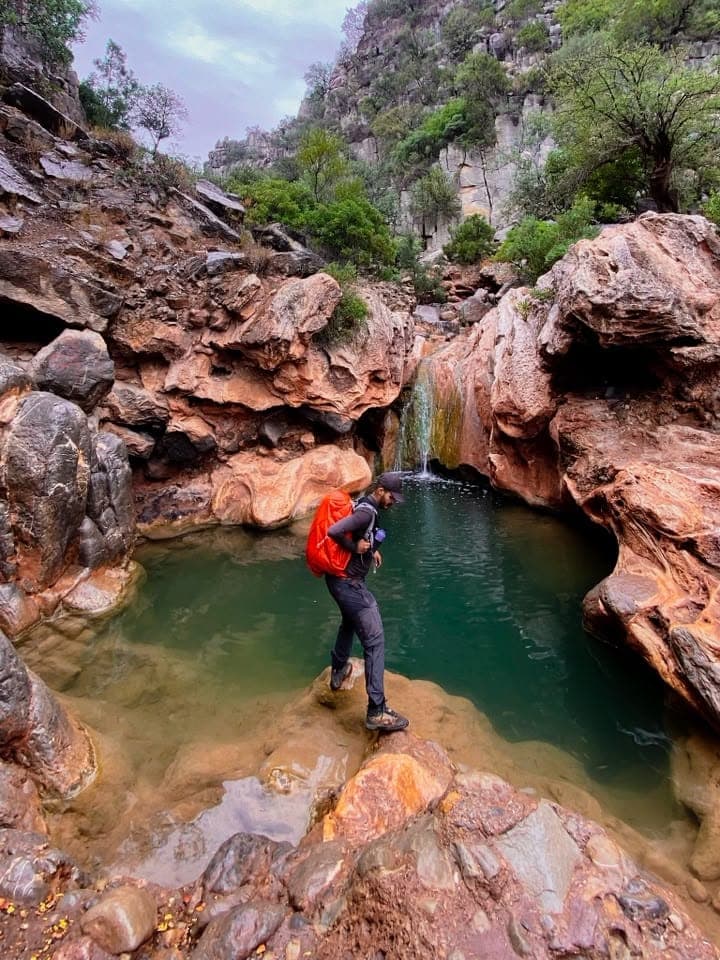 Half day or full day
Ait Lahcen Waterfalls
Waterfalls, pools and a palm oasis an hour from Agadir — with an optional climb to a 1 160 m summit looking back at the coast.
- Distance from Agadir
- 32 km
- Drive time
- 1h
- Difficulty
- Easy to moderate
Private tripAsk for a price
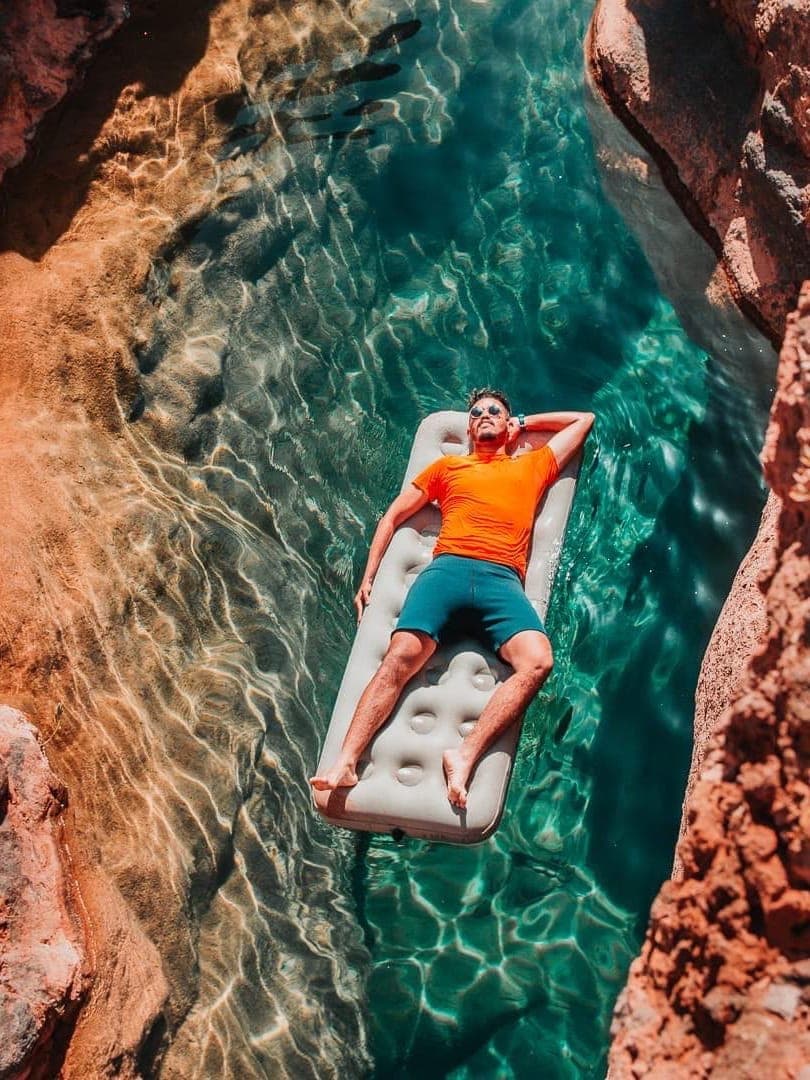 Half day
Ait Chleuh Valley
A green valley in the Ida Outanane mountains with water running all year, reached on foot through an old Amazigh village.
- Distance from Agadir
- 43 km
- Drive time
- 1h15
- Difficulty
- Easy
Private tripAsk for a price